Today I learned one thing.
Live.
Cry.
Liberate from your-self.
Hoy aprendi algo.
Vive.
Llora.
Liberate de ti mismo.
Wednesday, September 7, 2011


Thursday, September 1, 2011
Wednesday, August 10, 2011
Gotta Keep things Going
So here is a very old examination I did of a piece of poetry.
The Hymn of a Fat Woman
The poem by Joyce Huff, “The Hymn of a Fat Woman”, is an interesting poem if examined part by part. The poems six stanzas work together to convey a message that only in that order would work. The first stanza works as an introduction to the story; it makes an interesting observation. The second stanza and the third further develop and support the claim that is stated. The stanzas that follow are used to back up her claim, they further explain her claims. “The Hymn of Fat Woman” is a poem that is loaded with controversy; it is not a simple poem that alludes to many biblical passages. Huff makes the daring claim that fat people; women in particular, break the standard for what we claim to know as normal. What is normal to us is prescribed everyday by not only the media, but also by society which is supported by our religious icons.
“All of the saints starved themselves
Not a single fat one
The words ‘deity’ and ‘diet’ must have come from the same
Latin root.” (Huff lines 1-4.)
The author makes a statement that all saints are always thin. If one actually thinks about it, this statement can be seen as true. The question then becomes, how so? And why is this in any way pertinent to the title? Huff seems to be trying to prove something that is evident in today’s society. Saints are typically the most venerated and respected holy figures right after God. They are figures that represent love and worship, figures of ultimate good. There are no fat saints, as she said; it is as if in order to be a saint a qualification is to be skinny. A bit of humor then instills when she uses the play on words of the words “deity” and “diet”. Ultimately, the goal of this stanza is to set plant the seed of doubt. Huff gets the readers to question “Why really is it that all saints are thin? And if taken the joke seriously, “Really, how similar do those words sound?” In the following stanzas Huff, guides us to think more about the subject of physical complexity and its constant use to represent ultimate good and beauty.
“Those saints must have been thin as knucklebones
or shards of stained
glass or Christ carved
on his cross” (Huff lines 5-8.)
The choice of words such as “thin as knucklebones” brings to the readers mind the image of a skeleton-like individual. Huff, still continues on the observation that all saints coincidentally are all skin and bones. The imagery that is used to describe these saints as shards of stained glass corresponds with the whole “holy” ideal. These saints, the thin-starved saints are all fragments of glass that ultimately correspond to the image of a Christian church; its glass-stained windows. In this church, the symbol of Christ, the cross is the main theme. Christ’s symbol, the cross, is a universal sign for the religion. Huff, again, compares the thinness of the saints to the thin shards of glass as well as the complexity of Christ carved on his cross. This stanza helps the readers visualize and relate to the idea of being thin such as the widely recognized Christ on the cross. Stanza three contains more visual images that appeal to the idea of saints and its physical complexity. “Hard as pew seats/ Brittle as hair shirts” (Huff lines 9-11.) Still, with the image of the church Huff further constructs on the picture of the religious and what it represents. By describing the thin saints as hard as pew seats, one can almost picture these saints entirely made of pew seats. Pew seats are of a material so hard, yet brittle and with a weekly old smell that is almost familiar. Pew seats if you have ever been to a church are very distinct, and are an article of use in a place in which everything is of holy use, the seats are the only things that have no sort of holy value. The brittle hair shirts were shirts made entirely of hair that were made to be worn by people who were in the idea of penitence. These images; the pew seats, the hair shirts are necessary to instill the image of discomfort. This distinct image of discomfort so accessible to the reader, the choice of words lets the readers understand that somehow being thin is something displeasing. Huff then narrows down the subject at examination; women’s role in religion and the norms they must abide to which is written by the scriptures.
“Women made from bone,/like the ribs that protrude from his wasted wooden chest./Women consumed by fervor” (Huff 11-14.) Huff seems to try and explain that women themselves are made from skin and bones. Like a clay model, women have been shaped from the bone that was taken out of Adams rib. Having no other choice but to obey to the shape that they were molded into, women must be seemed normally thin. Religion, now enforces the idea that women must be seen naturally thin; that to be thin is normal. The “ribs that protrude from his wasted wooden chest” which Huff mentions could possibly be the ribs of the Christ carved on the cross. Huff reminds us again that according to Genesis, women are made out of the ribs of man. The cross is for always a constant reminder of what beauty and good is; the physical attribute although sometimes looked over is very influential. Huff, in the last sentence of the third stanza and in the fourth stanza digs deeper into the role of women and faith as well as the physical requirements.
“Women consumed by fervor” is a statement that is surrounded by controversy. She talks about women who are consumed by extreme passion towards Christ. And who hasn’t seen this? They are everywhere, extreme fanatics who take to heart what the scriptures say, women who follow the role of the obedient women. Again, Huff mocks the way that women are trained to live as things and not living beings. They are made to follow the rules that are set by religion and society. In stanza three this same mockery and observation continues.
“They must have been able to walk three or four abreast
down that straight and oh-so-narrow path
They must have slipped with ease through the eye
of the needle, leaving the weighty
camels stranded at the city gate.” (Huff lines 15-19.)
Huff takes on a Biblical story approach to mocking how women might act in those times. She sees those same thin “Crazy” women being able to walk three or maybe even four side by side down a straight narrow path. The path that she seems to be talking about is. She uses the Bible verse of Matthew 19:24, “And again I say unto you, It is easier for a camel to go through the eye of a needle, than for a rich man to enter into the kingdom of God.” Huff uses this bible verse to show that these woman, supposedly free of sin and skinny would be able to walk in the city three or four abreast. She makes it seem so easy for these skinny women to walk into the city in which only sin-free people walk in. They would leave the fat camels at the entrance and simply walk in the glamorous city. Within this city only skinny beautiful women would walk around happily. However, Huff being a fat woman herself, feeling like the “odd-apple” she does not see herself amongst the paradise city. In the last two stanzas of this poem she makes her point clear.
Huff continues to use biblical references to make a strong ironic point.
“Within the spare city’s walls
I do not think I would find anyone like me
I imagine I will find my kind outside
lolling in the garden
munching on the apples.” (Huff lines 20-24.)
This city, the “Kingdom of God” is heaven for Christians, this place, Huff argues, would be inaccessible to her kind. Fat folks like her would not be able to pass the gates, being so small as a needle eye, as well as being a place for non-sinners. The sin that is apparently keeping them out is gluttony, and perhaps its not only sins that keep her kind out; it is that they do not meet the requirements. Inside the city there is only thin individuals, it seems that Huff tries to argue that these “saints”, some not sin-free, are capable of accessing the city because of their physique. Ultimately, not being thin, is the biggest sin that fat people have; therefore they cannot and will never gain saint-hood. Her kind would in fact do more sinning in the eyes of the religious. Her kind would be in the Garden of Eden and survive from the original sin; eating from the forbidden tree. Huff seems to laugh and defy the religions principles and rules; she no longer cares about such ridiculous ideas that ostracize her. She would much rather live happily and sinfully than die a hypocrite and unhappy. Huff’s poem at the end, is purely combative, she will not take any more of the rules and with her observations she proves so.
But her observations are far more than simple observations; they are truths that transcend into our society. What Huff is trying to make clear to the readers is that what we are doing is wrong. We have permitted religion to dominate and mandate our everyday lives, religion has gone so far as to telling us what beauty is. The images of what is holy, i.e. the saints, are our model of good along with the image of Christ on the cross. Religion, in this case Christianity is used to dominate lives. In Christianity the roles of women are clearly outlined, they must obey and conform. If they do not conform they are sinners and will face the consequences. To be fat is to be sinful. Huff points out these examples of how Christianity intrudes into our own personal life. Saints and Christ are made to look thin and beautiful only to make us feel different. We must look like them if we want to be “Saved” too; we must starve and be crucified in order to be saved. Fat people are the epitome of evil and sin; they are the exact opposite of what it is to be holy. The Hymn of a Fat Woman is the cry of a woman who no longer lets herself be classified as “Evil” by society or religion. Huff decided that her people, the fat, needed a hymn, an ode to their being. Because, if for being physically wrong means being morally and entirely wrong; then so be it, for there many of them. They will not be in the city; they will be enjoying themselves in the garden devouring all the food that is available. Huff creates a strong poem that makes the bells go off in the church. She starts with a serious claim, the follows it with a little humor to catch the audience. Then she goes on to describe the saints and Christ’s appearance, which then extends to the church setting. She pokes fun of those women who follow the norms of the church and society. Excludes herself from the herd to make her own species; a guilt-free happy pack. In overall, Huff’s poem is more than a poem; it is a Hymn like she titles it; a flag that is used to wave the freedom that is involved with her physique. For they, the fat ones, although not appealing to the standard are free of sin and have now cast the first stone.
The Hymn of a Fat Woman
The poem by Joyce Huff, “The Hymn of a Fat Woman”, is an interesting poem if examined part by part. The poems six stanzas work together to convey a message that only in that order would work. The first stanza works as an introduction to the story; it makes an interesting observation. The second stanza and the third further develop and support the claim that is stated. The stanzas that follow are used to back up her claim, they further explain her claims. “The Hymn of Fat Woman” is a poem that is loaded with controversy; it is not a simple poem that alludes to many biblical passages. Huff makes the daring claim that fat people; women in particular, break the standard for what we claim to know as normal. What is normal to us is prescribed everyday by not only the media, but also by society which is supported by our religious icons.
“All of the saints starved themselves
Not a single fat one
The words ‘deity’ and ‘diet’ must have come from the same
Latin root.” (Huff lines 1-4.)
The author makes a statement that all saints are always thin. If one actually thinks about it, this statement can be seen as true. The question then becomes, how so? And why is this in any way pertinent to the title? Huff seems to be trying to prove something that is evident in today’s society. Saints are typically the most venerated and respected holy figures right after God. They are figures that represent love and worship, figures of ultimate good. There are no fat saints, as she said; it is as if in order to be a saint a qualification is to be skinny. A bit of humor then instills when she uses the play on words of the words “deity” and “diet”. Ultimately, the goal of this stanza is to set plant the seed of doubt. Huff gets the readers to question “Why really is it that all saints are thin? And if taken the joke seriously, “Really, how similar do those words sound?” In the following stanzas Huff, guides us to think more about the subject of physical complexity and its constant use to represent ultimate good and beauty.
“Those saints must have been thin as knucklebones
or shards of stained
glass or Christ carved
on his cross” (Huff lines 5-8.)
The choice of words such as “thin as knucklebones” brings to the readers mind the image of a skeleton-like individual. Huff, still continues on the observation that all saints coincidentally are all skin and bones. The imagery that is used to describe these saints as shards of stained glass corresponds with the whole “holy” ideal. These saints, the thin-starved saints are all fragments of glass that ultimately correspond to the image of a Christian church; its glass-stained windows. In this church, the symbol of Christ, the cross is the main theme. Christ’s symbol, the cross, is a universal sign for the religion. Huff, again, compares the thinness of the saints to the thin shards of glass as well as the complexity of Christ carved on his cross. This stanza helps the readers visualize and relate to the idea of being thin such as the widely recognized Christ on the cross. Stanza three contains more visual images that appeal to the idea of saints and its physical complexity. “Hard as pew seats/ Brittle as hair shirts” (Huff lines 9-11.) Still, with the image of the church Huff further constructs on the picture of the religious and what it represents. By describing the thin saints as hard as pew seats, one can almost picture these saints entirely made of pew seats. Pew seats are of a material so hard, yet brittle and with a weekly old smell that is almost familiar. Pew seats if you have ever been to a church are very distinct, and are an article of use in a place in which everything is of holy use, the seats are the only things that have no sort of holy value. The brittle hair shirts were shirts made entirely of hair that were made to be worn by people who were in the idea of penitence. These images; the pew seats, the hair shirts are necessary to instill the image of discomfort. This distinct image of discomfort so accessible to the reader, the choice of words lets the readers understand that somehow being thin is something displeasing. Huff then narrows down the subject at examination; women’s role in religion and the norms they must abide to which is written by the scriptures.
“Women made from bone,/like the ribs that protrude from his wasted wooden chest./Women consumed by fervor” (Huff 11-14.) Huff seems to try and explain that women themselves are made from skin and bones. Like a clay model, women have been shaped from the bone that was taken out of Adams rib. Having no other choice but to obey to the shape that they were molded into, women must be seemed normally thin. Religion, now enforces the idea that women must be seen naturally thin; that to be thin is normal. The “ribs that protrude from his wasted wooden chest” which Huff mentions could possibly be the ribs of the Christ carved on the cross. Huff reminds us again that according to Genesis, women are made out of the ribs of man. The cross is for always a constant reminder of what beauty and good is; the physical attribute although sometimes looked over is very influential. Huff, in the last sentence of the third stanza and in the fourth stanza digs deeper into the role of women and faith as well as the physical requirements.
“Women consumed by fervor” is a statement that is surrounded by controversy. She talks about women who are consumed by extreme passion towards Christ. And who hasn’t seen this? They are everywhere, extreme fanatics who take to heart what the scriptures say, women who follow the role of the obedient women. Again, Huff mocks the way that women are trained to live as things and not living beings. They are made to follow the rules that are set by religion and society. In stanza three this same mockery and observation continues.
“They must have been able to walk three or four abreast
down that straight and oh-so-narrow path
They must have slipped with ease through the eye
of the needle, leaving the weighty
camels stranded at the city gate.” (Huff lines 15-19.)
Huff takes on a Biblical story approach to mocking how women might act in those times. She sees those same thin “Crazy” women being able to walk three or maybe even four side by side down a straight narrow path. The path that she seems to be talking about is. She uses the Bible verse of Matthew 19:24, “And again I say unto you, It is easier for a camel to go through the eye of a needle, than for a rich man to enter into the kingdom of God.” Huff uses this bible verse to show that these woman, supposedly free of sin and skinny would be able to walk in the city three or four abreast. She makes it seem so easy for these skinny women to walk into the city in which only sin-free people walk in. They would leave the fat camels at the entrance and simply walk in the glamorous city. Within this city only skinny beautiful women would walk around happily. However, Huff being a fat woman herself, feeling like the “odd-apple” she does not see herself amongst the paradise city. In the last two stanzas of this poem she makes her point clear.
Huff continues to use biblical references to make a strong ironic point.
“Within the spare city’s walls
I do not think I would find anyone like me
I imagine I will find my kind outside
lolling in the garden
munching on the apples.” (Huff lines 20-24.)
This city, the “Kingdom of God” is heaven for Christians, this place, Huff argues, would be inaccessible to her kind. Fat folks like her would not be able to pass the gates, being so small as a needle eye, as well as being a place for non-sinners. The sin that is apparently keeping them out is gluttony, and perhaps its not only sins that keep her kind out; it is that they do not meet the requirements. Inside the city there is only thin individuals, it seems that Huff tries to argue that these “saints”, some not sin-free, are capable of accessing the city because of their physique. Ultimately, not being thin, is the biggest sin that fat people have; therefore they cannot and will never gain saint-hood. Her kind would in fact do more sinning in the eyes of the religious. Her kind would be in the Garden of Eden and survive from the original sin; eating from the forbidden tree. Huff seems to laugh and defy the religions principles and rules; she no longer cares about such ridiculous ideas that ostracize her. She would much rather live happily and sinfully than die a hypocrite and unhappy. Huff’s poem at the end, is purely combative, she will not take any more of the rules and with her observations she proves so.
But her observations are far more than simple observations; they are truths that transcend into our society. What Huff is trying to make clear to the readers is that what we are doing is wrong. We have permitted religion to dominate and mandate our everyday lives, religion has gone so far as to telling us what beauty is. The images of what is holy, i.e. the saints, are our model of good along with the image of Christ on the cross. Religion, in this case Christianity is used to dominate lives. In Christianity the roles of women are clearly outlined, they must obey and conform. If they do not conform they are sinners and will face the consequences. To be fat is to be sinful. Huff points out these examples of how Christianity intrudes into our own personal life. Saints and Christ are made to look thin and beautiful only to make us feel different. We must look like them if we want to be “Saved” too; we must starve and be crucified in order to be saved. Fat people are the epitome of evil and sin; they are the exact opposite of what it is to be holy. The Hymn of a Fat Woman is the cry of a woman who no longer lets herself be classified as “Evil” by society or religion. Huff decided that her people, the fat, needed a hymn, an ode to their being. Because, if for being physically wrong means being morally and entirely wrong; then so be it, for there many of them. They will not be in the city; they will be enjoying themselves in the garden devouring all the food that is available. Huff creates a strong poem that makes the bells go off in the church. She starts with a serious claim, the follows it with a little humor to catch the audience. Then she goes on to describe the saints and Christ’s appearance, which then extends to the church setting. She pokes fun of those women who follow the norms of the church and society. Excludes herself from the herd to make her own species; a guilt-free happy pack. In overall, Huff’s poem is more than a poem; it is a Hymn like she titles it; a flag that is used to wave the freedom that is involved with her physique. For they, the fat ones, although not appealing to the standard are free of sin and have now cast the first stone.
Monday, August 1, 2011
Monday, July 18, 2011
"Green" Activism and its History
Green activism has been around for millions of years, it is second nature to the earth itself. To renew, to recycle, to rid of the old toxicicity and create new health. This nature, this behavior would then be adapted and copied by the inhabitants of said ecosystem. Why not? As it is only "natural". Our own bodies! The way our bodies operate, the organism is an ecological friendly and "Green" living example. From there on, after the many years and tribes flourished in this planet, many new behaviors were adapted. These behaviors were only "actions" copied from an "actor", the human only copies and modifies after the years but never creates! The constant travel and spread of these people and their behaviors allowed them and others to see their way of life. They, the people, with the nomadic style of life were able to see different behaviors and were able to imitate them and take them to where ever they moved. The people learned from their surroundings as to how to live in this new place, they quickly adapted to their surroundings, as it is only of human capacity to do so! As the tribes flourished behaviors spread, ideas came and went, the tribes would then later develop systems of trades, only copied this idea from nature. The people traded ways of life, they traded language, they traded ideas, and they shared what they knew! Living at peace with the one! Living according to the rules and limits of nature!
From these tribes, cultures and ethnicities originated, with a set of beliefs proven to be correct according to their habitat, for now they had settled and built a static "home". (This of course also copied from nature; a home) These tribes, over the years would prove and modify their beliefs, their behavior and would then use to them cal them truths and laws to which abide to. Still, they followed THE WAY, they were observants for many years and were able to identify THE WAY. In short, they lived true to their nature! They were "Green" as we would vulgarly say today! It is then, with this image in my mind that I question as to why the prostitution of our own nature? Why the commercialization of our own selves? Why must we sell and advertise who and what we are? Where did we go wrong? Surely, I might be incorrect in some of my logic but that is where YOU come in. Can you see this? Can you see the pattern, the way? Do you agree that the idea of being "Green" is nothing more than true nature to the human being? How did we lose this nature? Is this what they call Evolution? Adapting? What is making us come back to this primal instinct/behavior? Why now?
From these tribes, cultures and ethnicities originated, with a set of beliefs proven to be correct according to their habitat, for now they had settled and built a static "home". (This of course also copied from nature; a home) These tribes, over the years would prove and modify their beliefs, their behavior and would then use to them cal them truths and laws to which abide to. Still, they followed THE WAY, they were observants for many years and were able to identify THE WAY. In short, they lived true to their nature! They were "Green" as we would vulgarly say today! It is then, with this image in my mind that I question as to why the prostitution of our own nature? Why the commercialization of our own selves? Why must we sell and advertise who and what we are? Where did we go wrong? Surely, I might be incorrect in some of my logic but that is where YOU come in. Can you see this? Can you see the pattern, the way? Do you agree that the idea of being "Green" is nothing more than true nature to the human being? How did we lose this nature? Is this what they call Evolution? Adapting? What is making us come back to this primal instinct/behavior? Why now?
Wednesday, June 29, 2011
Old Paper-The String Theory.
The String Theory is a fascinating new theory that has revolutionized the world of physics since the last twenty years. The String Theory basically claims that taking in account the force of gravity and current knowledge of physics the smallest unit; smaller than the atom and quark everything is made of strings. This monistic metaphysical belief has its roots since the early pre-Socratic era of philosophy. The String Theory can be “dissected” and studied for what it is, just another attempt of a philosopher to make true of the world. This is exactly why we must stop to analyze and look back on other theory such as the one in topic and ask, “Has it worked? And will it work?” Whatever may be the answer we must not forget that it is only a theory and still in the process of experimentation.

Philosophy as some might refer to it, is the father of all sciences, the starting point for every branch of studies; biology, astronomy, chemistry, mathematics, psychology, etc. Major breakthroughs in science, math, and technology have occurred in the last centuries for it had not been for philosophers. Great thinkers leave their legacies; their studies for future generations to discover the many enigmas of this world. Their work is a starting line for those who think alike and want to put an answer to age-old questions. Since the beginning of time many have wondered and wondered, some have not only wondered, but set out on a journey to discover the truth. Of the many journeys taken, physics, the study of how matter reacts in earth in relation to time, space, and energy. Physicists are always trying to find molds that will fit into how the world reacts and make it rational through math; their recent theory, the sting theory, does exactly this. The theory of the Strings is relatively new in the world of physics; but its principle is no stranger in the world of philosophy. The theory of the Strings can be explained and related to philosophy by its most basic idea, the idea that the whole world is made out of strings. This is why when viewing the String theory under a philosophical perspective, the grains of such idea is simply one involving the monistic metaphysical theory that the world is made of one thing. However it should only be left at that, for it is a philosophy explained with some mathematics, we shouldn’t entirely depend on such observations.
Human nature compels us to contemplate and ask about our provenance; why are we here? Early Greek philosophers certainly left a vast number of dilemmas for future philosophers who would answer with math and science. Take for instance Empedocles, a Greek philosopher part scientist from 500 BC. Empedocles was the first to argue that matter, the consistency of things, was made from elements. Empedocles proposed elements were Earth, Fire, Water, and Wind, from these “basic” elements everything in the world was constructed. “How from the mingling of the elements, The Earth and Water, the Ether and the Sun So many forms and hues of mortal things Could thus have being, as have come to be” (Leonard, 1908). Democritus, who would come a few decades after Empedocles, would take this idea a step farther. Democritus noticed that when taking said element, for example a rock, inside this rock even more small particles were present. These observations led Democritus to discover what he called the “atomos”. He described the atomos as the smallest unit of the whole and believed the atomos to be indestructible. “The material cause of all things that exist is the coming together of atoms and void. Atoms are too small to be perceived by the senses. They are eternal and have many different shapes, and they can cluster together to create things that are perceivable. Differences in shape, arrangement, and position of atoms produce different things. By aggregation they provide bulky objects that we can perceive with our sight and other senses” (Nahm, 1962). Years later after Democritus had discovered the atom; Epicurus came and took his idea only to perfection it. Epicurus not only agreed with Democritus, but also came to the idea that in fact the atoms were responsible for the makeup things. And it wasn’t only atoms that predetermined what could be created or not, but it was the “swerve” that randomized the outcome. The “swerve” was Epicurus solution to how things changed; for him nothing ceased to exist but only changed. “The universe has always been the same as it now is.’ This principle is known to us as the law of indestructibility and uncreatibility of matter” (DeWitt, 1954). What many infer from such claim is that nothing can be destroyed or created. Which would lead to French chemist Lavoisier to the “Law of Conservation of Mass” which basically re-states what Epicurus had found; that matter cannot be destroyed, it only changes but its consistency stays the same. All of these basic observations done by early philosophers lead future scientists to work with such findings. Today not only do we have more than four elements, we have more than one hundred. Democritus was not far when he stated that the atom existed but today not only do we know that the atom exists, but also that it is in fact the essential being for anything. These ideas, Democritus, Empedocles, and Epicurus lead to what we know as today the Law of Conservation of Energy. There seems to be a relation between scientists and philosophers, scientists are philosophers who make true of their beliefs through not only observation but also mathematics.
In an online Physics and Astronomy Forum called PhysLink.com, a person by the name of John asked, “What is the String Theory and who came up with it?”According to Brent Nelson, M.A. Physics, Ph.D. Student, UC Berkeley, the theory dates back to 1986 when in a September 1986 article of Scientific American by the title of ‘Superstrings’ Michael Green first introduced this concept. Brent Nelson points out that the string theory is one of the theories that seem to explain many things, it is still in everlasting change because of new technology that modifies certain aspects of the theory. The string theory is basically a theory that states that the whole world is made up of various types of strings. These strings react to various forces that act upon these ropes, thus making them move. This theory as of right now is one of the most commonly used to study physics; it is sort of a temporary answer to the question of what is this world made of? In another website Alberto Güijosa, a researcher from the Department of High Energy Physics of the Institute for Nuclear Science at Mexico's National Autonomous University (UNAM), further explains this concept. “Ordinary matter is made of atoms, which are in turn made of just three basic components: electrons whirling around a nucleus composed of neutrons and protons. The electron is a truly fundamental particle (it is one of a family of particles known as leptons), but neutrons and protons are made of smaller particles, known as quarks. Quarks are, as far as we know, truly elementary” (Güijosa, 1998). Normal matter can be described as such; however, when presented with the problem of gravity, there seemed to be something missing. “The essential idea behind string theory is this: all of the different 'fundamental ' particles of the Standard Model are really just different manifestations of one basic object: a string. How can that be? Well, we would ordinarily picture an electron, for instance, as a point with no internal structure. A point cannot do anything but move. But, if string theory is correct, then under an extremely powerful 'microscope' we would realize that the electron is not really a point, but a tiny loop of string. A string can do something aside from moving--- it can oscillate in different ways. If it oscillates a certain way, then from a distance, unable to tell it is really a string, we see an electron. But if it oscillates some other way, well, then we call it a photon, or a quark, or a ... you get the idea. So, if string theory is correct, the entire world is made of strings!”(Güijosa, 1998). Such theory seems to be the answer when faced with the problem of gravity, as already stated. This is why the String Theory is causing such a revolt amongst the physics world, because they finally seem to have answered one of many questions. This theory seems to be perfect fit to describe as to what the world is composed of, however numerous amount of calculations to determine if such thing is true have been done over the past thirty years. Still, since the first time mentioned, such theory has not been proven, it is still in the testing.
So far the String Theory shows lots of similarities with many early philosophers and their idea of what The One was. The One, that which is everything the only thing that stays never-changing, in other words; the constant variable. For Thales the Pre-Socratic Greek philosopher The One was water. Thales believed that everything in the world; trees, animals, mountains, etc. were constructed from water. Heraclitus claimed that the one was the changing, that everything itself is ever changing. That in fact everything in this world was partially made of changing. Parmenides believed the one was a mysterious substance; this mysterious substance was in all. The mysterious substance didn’t really answer anything it was just a way of explaining Parmenides reason for the one. Zeno another pre-Socratic philosopher stated that the one was actually ideas in general. Zeno thought that it was our ideas that shaped what the world looked like. All of these philosophers viewed life in a monistic view; their metaphysics stated that they perceived reality to be made of only one thing. Like these philosophers, physicists believe that the world is made of one thing; in the case of the String Theory, strings.
String theory as already explained; contains the main metaphysical idea that the world is made of strings. This idea is also viewed in the historical context of philosophy; they both share the same elementary ideas. The only difference is that physicists do not mainly focus on the ideas or observations of the world; they do not contemplate, in the other hand; they make calculations based on observations. For several centuries we have trusted what these persons have written and said. Our whole educational system has been majorly based upon philosophies proven by observations and mathematics. John Locke argues that science and its views is nothing more than a person’s point of view on the world, just like any other person would. More importantly is that theories based on observations cannot be one-hundred percent accurate. They cannot be taken into full consideration because even our senses can fool us, we cannot be certain in fact if what we are seeing is true. Locke in one of his epistemological claims argues that in fact knowledge is the agreement of our ideas. “We have hitherto considered those Ideas, in the reception whereof, the Mind is only passive, which are those simple ones received from Sensation and Reflection before-mentioned, whereof the Mind cannot make anyone to it self, nor have any Idea which does not wholy consist of them. But as these simple Ideas are observed to exist in several Combinations united together; so the Mind has a power to consider several of them united together, as one Idea; and that not only as they are united in external Objects, but as itself has joined them. Ideas thus made up of several simple ones put together, I call Complex; such as are Beauty, Gratitude, a Man, an Army, the Universe; which tough complicated various simpleIdeas, made up of simple ones, yet are, when the Mind pleases, considered each by if self, as one entire thing, and signified by one name” (Locke, 1894). This claim certainly makes one think, and truly analyze in deep what is science? In this case, the String Theory is nothing more than a person trying to make true of the world he perceives. Which makes us think? “What else has been nothing but opinions? What really have we learnt?” Well some may argue that knowledge does not exist, that is purely just recollection of experiences from our souls. Others argue that in fact we do have knowledge and that sciences prove many things in this world. Which one applies?
The String Theory is simply yet another metaphysical philosophy; it is only an attempt to explain the world. However one cannot disregard that for the past centuries these ideologies have seem to work and helped us understand more of the world in which we live in. Perhaps it is not only just an attempt to make the world rational, maybe it does work. History has proven to be favorable for the sciences and the philosophies that support its cause. Whatever may be the case, one thing is clear; that in fact philosophy is all around us. Philosophy may be unappreciated by many, forgotten if you may; but it is still present in all aspects of our lives. If not for philosophy never would we learn about chemistry, physics, nor would anything may have been discovered. If it not had been for the philosopher inside every great inventor, scientists, mathematician, politician, etc. society would indeed fall apart. A world without philosophers would simply be pointless; “the goal of every generation of people on this planet would be to duplicate, as closely as possible, the beliefs of previous generations. Lacking habits of philosophical criticism and independence, the Old Way would be not only the Best Way but also the Only Way. Philosophy began, and continues to develop, by ceaselessly arguing that there are far better ways than the Old Way” (Company, & philosophie, 1999). Philosophy is the only window that humans have that enables us to peek into what reality might be. Philosophy as used by such scientists should be a tool to be used when trying to find an explication for our problems. It should be used to examine our way of life, our society, and perhaps help us understand the habitants of the world so that we can live in harmony.
Reference Page
Company, H.W., & philosophie, Université. (1999).International philosophical bibliography. 1999.
DeWitt, N.W. (1954). Epicurus & his philosophy. London, Bombay, and Karachi: Geoffrey Cumberlege: Oxford University Press.
Güijosa, A. (1998, December). What is String theory? Retrieved from http://www.nuclecu.unam.mx/~alberto/physics/string.htm
Leonard, W. E. (1908). The Fragments of Empedocles. Chicago, IL: The Open Court Publishing Company.
Locke, J. (1894). An Essay concerning human understanding. Oxford: The Clarendon Press.
Nahm, M.C. (1962). Selections from early Greek philosophy . Cambridge, England: The University Press.
Wednesday, May 25, 2011
Despierten Ya Mexicanos!
Pues aqui les vengo otra vez, ya hacia mucho tiempo que no escribia por aqui. Hoy les tengo algo aca chido. Hemos estado un poco ocupados, no hemos tenido tiempo para sentarme y escribir como lo hacia antes. En fin, aqui les va una cancion de Ignacio Lopez Tarso, que mas bien que cancion; narracion. Aqui les va, Ignacio Lopez Tarso con Despierten Ya Mexicanos!

Cancion Revolucionaria-Despierten Ya Mexicanos
Despierten ya mexicanos,
los que no han podido ver,
que andan derramando sangre
por subir a otro al poder.
los que no han podido ver,
que andan derramando sangre
por subir a otro al poder.
¡Pobre nación mexicana!
qué mala ha sido tu suerte;
tus hijos todavía quieren
mas en la desgracia verte.
qué mala ha sido tu suerte;
tus hijos todavía quieren
mas en la desgracia verte.
Mira a mi patria querida,
nomás como va quedando;
que esos hombres más valientes,
todos los van traicionando.
nomás como va quedando;
que esos hombres más valientes,
todos los van traicionando.
¿Dónde está el jefe Zapata?
¿Qué esa espada ya no brilla?;
¿dónde esta el bravo del Norte
que era don Francisco Villa?
¿Qué esa espada ya no brilla?;
¿dónde esta el bravo del Norte
que era don Francisco Villa?
Yo no he visto candidato
que no sea convenenciero;
cuando suben al poder
no conocen compañero.
que no sea convenenciero;
cuando suben al poder
no conocen compañero.
Zapata le dijo a Villa:
–Ya perdimos el albur;
tu atacarás por el Norte,
yo atacaré por el Sur.
–Ya perdimos el albur;
tu atacarás por el Norte,
yo atacaré por el Sur.
Ya con ésta me despido
porque nosotros nos vamos;
que termina el corrido:
Despierten ya mexicanos.
porque nosotros nos vamos;
que termina el corrido:
Despierten ya mexicanos.
Dicen los que saben, que la verdad es eternamente incambiable, eh aqui en estas estrofas un mero ejemplo. Esta cancion la puedes escuchar ya sea en la epoca de la revolucion o ya hoy en dia y la situacion aun no ha cambiado. Ya hace mas de cien años que esta cancion fue escrita y uno podria jurar que fue ayer que la escribieron. Aqui el escritor manda un llamado a todos los mexicanos que duermen mientras la vida sigue. Despierten! Miren! Abran los ojos! Que acaso no ven? O nada mas NO QUIEREN ver? La cruda realidad es que hay muerte eh injusticia a nuestro alrededor! El narrador continua con la gran proclamacion de que la lucha por el poder es la cuna de la desgracia de nuestro poder. Uno tendria que notar que esta observacion no solamente aplica a Mexico si no a todo el mundo! Pero para eso, al rato lo desenvolvemos completamente.


Pobre Nacion Mexicana es la frase correcta! Pobre gente de la cual los poderosos se burlan cada dia! Es la historia sin fin. Es la historia de un pueblo de gente que jamas aprendera a disntiguir entre la realidad y el sueño! Como dice aquel dicho, "Nos durmieron con un cuento" y no despertamos, pero el sueño como todo aquel sueño es un recuerdo vago de lo que tal vez reconocemos como la vida real o como algo que nada mas no sabemos que es. Pero esta presente y lo seguira, porque el espiritu de el humano es libre y jamas sera apasiguado! Siempre habra esperanza!
El narrador cuenta que nostros mismos, los hijos de la patria somos los que nos perjudicamos. Esto tambien es cierto, es como aquella linea de personas que andan siguiendo a un ciego; se forman detras de el. Para que se forman? Pues quien sabe? Hay estaba este pelado enfrente! Pues nos ponemos! Las personas detras de el son videntes! Ellos si pueden ver pero por pereza y por la falsa idea de que estan haciendo algo bien pues nada mas ni la lucha le hacen. No sean asi! Miren a su alrededor! Abran los ojos! Nos dice el narrador! Observen bien a quien siguen, sepan a donde van! No se vayan a lo puro guey! No somos animales! No sean yunta! De aqui todos somos culpables! Deberiamos aprender a ser buenos "judios" en el sentido de que uno es responsable de las acciones de el otro. Claro, esto solamente funcionaria en teoria, ya en practica seria algo bastante rigoroso de seguir.

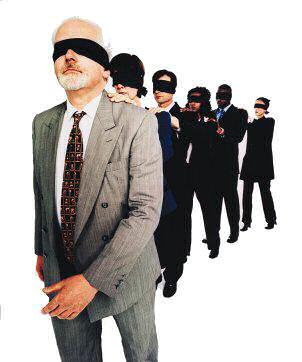
Que le a pasado a la patria, a esa nacion llena de guerreros, de gente trabajadora? Que le ha pasado a nuestra gente que hoy, en vez de ser correcta, quieren ser chueca? Que hizo cambiar a la gente? Que fue lo que los hizo querer ambicionar las cosas no transendentales? La necesidad. Las mentiras. El sistema es lo que arrincona a la gente a tener que vivir una vida vacia. Los hombre valientes de los que el narrador habla mueren dia a dia por la hambre, por la necesidad y por las manos de aquellos que buscan la facilidad de la vida galante. Al final del dia, todos somos esclavos a el sistema, a la vida.

Donde estan? Se pregunta el narrador, donde estan aquellos hombres ejemplares. Aquellos cuya mision en la vida era Despertar a sus compatriotas? Donde estan las figuras, las leyendas, los ultimos? Donde estan esos que despertaron por si mismos por gracia del destino? Donde estan esos que buscan la igualdad y libertad de todo poder? Muertos! Estan muertos, igual que la idea de el vivir simple, de vivir justamente con lo necesario y de estar en harmonia con la vida. Verdaderamente poderosos aquellos los que despiertan y reconocen "La Vida" observan y viven en harmonia de acuerdo a las leyes! (Daoismo)
Y de regreso a el presente, el narrador continua. No hay ningun candidato, ninguna persona que busque el mandato, el poder por razones justas y correctas. Jamas habra alguien asi mientras tengamos este modo de vida! Jamas! Y siempre son asi. La Historia Sin Fin!


Se Despide el narrador. Pero no para siempre, porque al igual que los Revolucionarios sigue el ataque. Sigue la Lucha incesable por la harmonia. Seguira esta Revolucion Humana en pie mientras siga vivo el espiritu y la alma humana.
Estaremos Dormidos! Pero todavia tenemos a ese sueno que nos recuerda de la realidad.
No descansaremos.
El Despertar Vendra!

Estaremos Dormidos! Pero todavia tenemos a ese sueno que nos recuerda de la realidad.
No descansaremos.
El Despertar Vendra!
Subscribe to:
Posts (Atom)